Google Ads déploie deux réglages optionnels pour hiérarchiser les canaux de diffusion et limiter la part du budget quotidien consacrée aux moins prioritaires.
Alors que l’appel à sujets pour la 14e édition des 24 jours de web est toujours ouvert et que nous attendons de pouvoir vous partager les vidéos et photos de la 21e édition de Paris Web, nous vous proposons de patienter en lisant les quelques retours et compte-rendus que les participant·es des conférences et ateliers ont publié sur leurs blogs ou sur les réseaux sociaux. Bonne lecture !
P.S. Si vous avez publié un compte-rendu que nous avons manqué, n’hésitez pas à nous le partager via nos comptes sociaux ou par e-mail, pour que nous l’ajoutions à la liste.
Le commerce agentique va nécessairement bouleverser les règles du commerce en ligne, mais les consommateurs sont-ils réellement tous prêts à déléguer leurs achats à des intelligences artificielles ? Si les briques technologiques sont déjà disponibles, les usages restent encore incertains. Une chose est sûre : les marques vont devoir apprendre à composer avec de nouveaux […]
Score sur 100, benchmark sectoriel et conseils actionnables : l'audit Instagram gratuit d'Auguste permet de repartir sur des bases solides avant de relancer sa stratégie social media.
Anthropic aborde Google Workspace par les deux bouts, avec une extension qui travaille dans le fichier ouvert et des connecteurs qui pilotent Docs, Sheets et Slides depuis le chat.
Mémoire absente, chemin figé, validation floue : Raphaël Khalifa, fondateur de Syniaps, détaille les trois causes qui font échouer les projets d’agents IA en entreprise.
Depuis le 2 août 2026, l'AI Act impose de signaler certains contenus produits par IA. Nous avons sélectionné 12 outils gratuits pour déclarer un contenu généré par IA et analyser un texte, une image ou une vidéo dont la provenance n'est pas établie.
Mistral AI présente Mistral Large 4 comme le meilleur modèle à poids ouverts d'Europe et des États-Unis. Un lancement très attendu pour une entreprise soupçonnée d'avoir décroché face aux laboratoires chinois et américains.
L'avocat Alexandre Bigot-Joly est l'invité du podcast Follow Back, produit par Swello en partenariat avec BDM. Dans cet épisode, il revient sur le cadre juridique de la creator economy, entre transparence obligatoire et risques liés à l'IA.
Vendredi 2 octobre 2026 se tenait la sixième édition du DevFest Perros-Guirec 2026. Au programme de cette journée, 10 conférences et 2 prises de paroles plus brèves (quickies) autour d’une même thématique, le « coder moins, penser plus » amorcé par l’essor de IA générative. En prime : vue sur mer et buffet à volonté en extérieur sur la pause déjeuner. Le cadre est posé.
Pourquoi assister à un DevFest sur l’IA ?
L’IA n’a pas vraiment bonne presse auprès de l’écoconception logicielle, et à raison. Bonne ou mauvaise, cette technologie semble partie pour s’installer. Nous choisissons de notre côté de nous investir pour accompagner celleux qui prennent encore le temps de s’interroger. Nous avons d’ailleurs construit la formation « Cadrer le déploiement d’une IA générative responsable » en ce sens.
Depuis plusieurs jours, les bots envahissent les posts Instagram des comptes d'influenceurs et de médias français. Mais qui se cache derrière ces profils ?
Naming is hard. The language we use shapes the way we think about things, but also the conversation we have about it. That’s why we have so much confusion about colors, icons, UI components, features — and that’s why we struggle to name design tokens, HTML classes, and variables.
Sometimes, the names we choose are too generic, so it’s difficult to understand what exactly is meant. And sometimes they are too specific, leaving little room for flexibility and reuse. How do we choose the right names? And which naming conventions work best? Let’s take a closer look.
How To Name Things
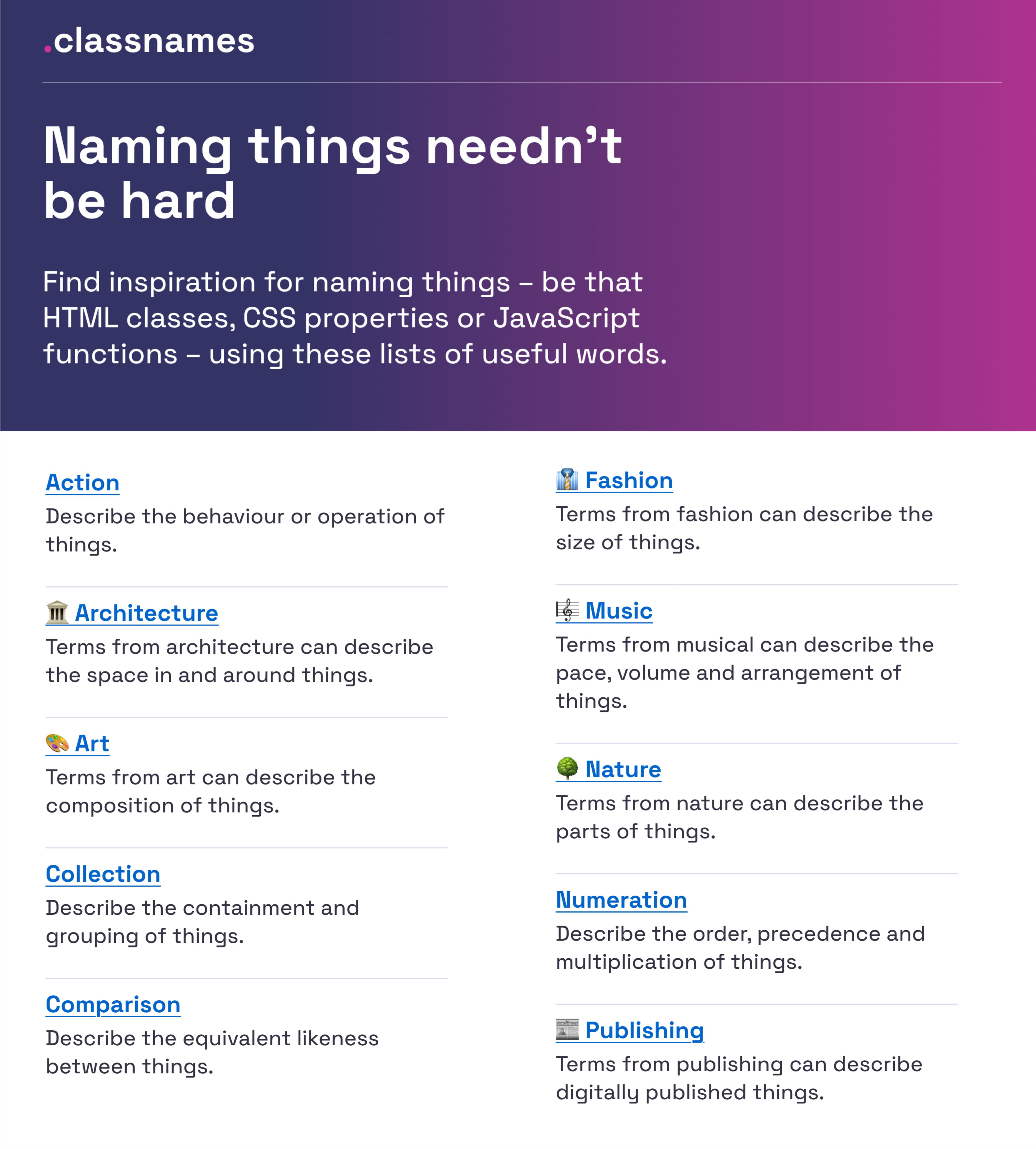
If you’re looking for some inspiration for naming HTML classes, CSS properties, or JavaScript functions, Classnames is a wonderful resource jam-packed with ideas that get you thinking outside the box.
The site provides thematically grouped lists of words perfect for naming. You’ll find terms to describe different kinds of behavior, likeness between things, order, grouping, and association, but also themed collections of words that wouldn’t instantly come to one’s mind when it comes to code, among them words from nature, art, theater, music, architecture, fashion, and publishing.
How To Name Colors
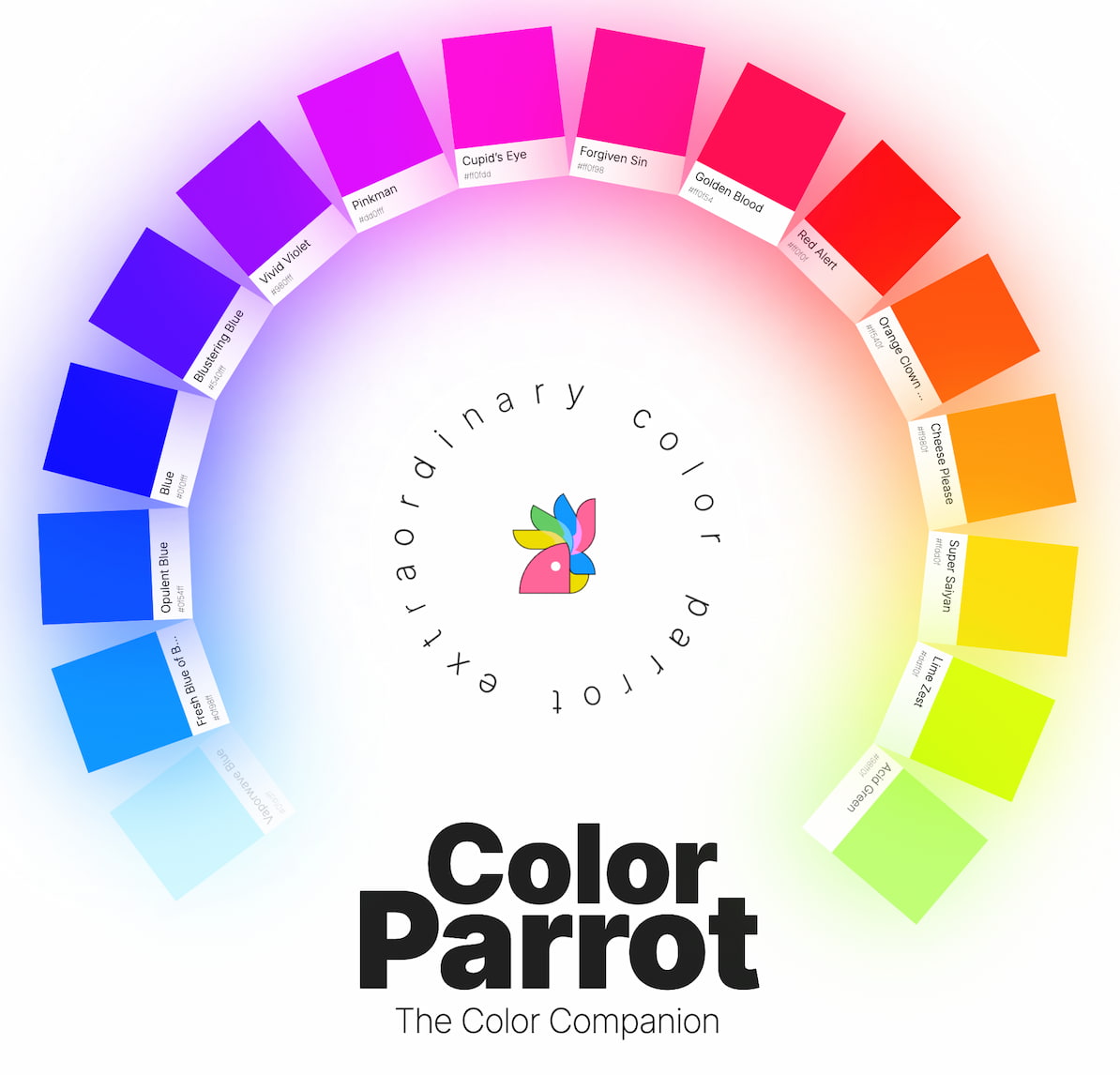
How would you choose the right name for a given color? Fortunately, David Aerne maintains a tremendous repository of color names, currently with 30355 unique color names, sourced from various references and 1000s of user contributions.
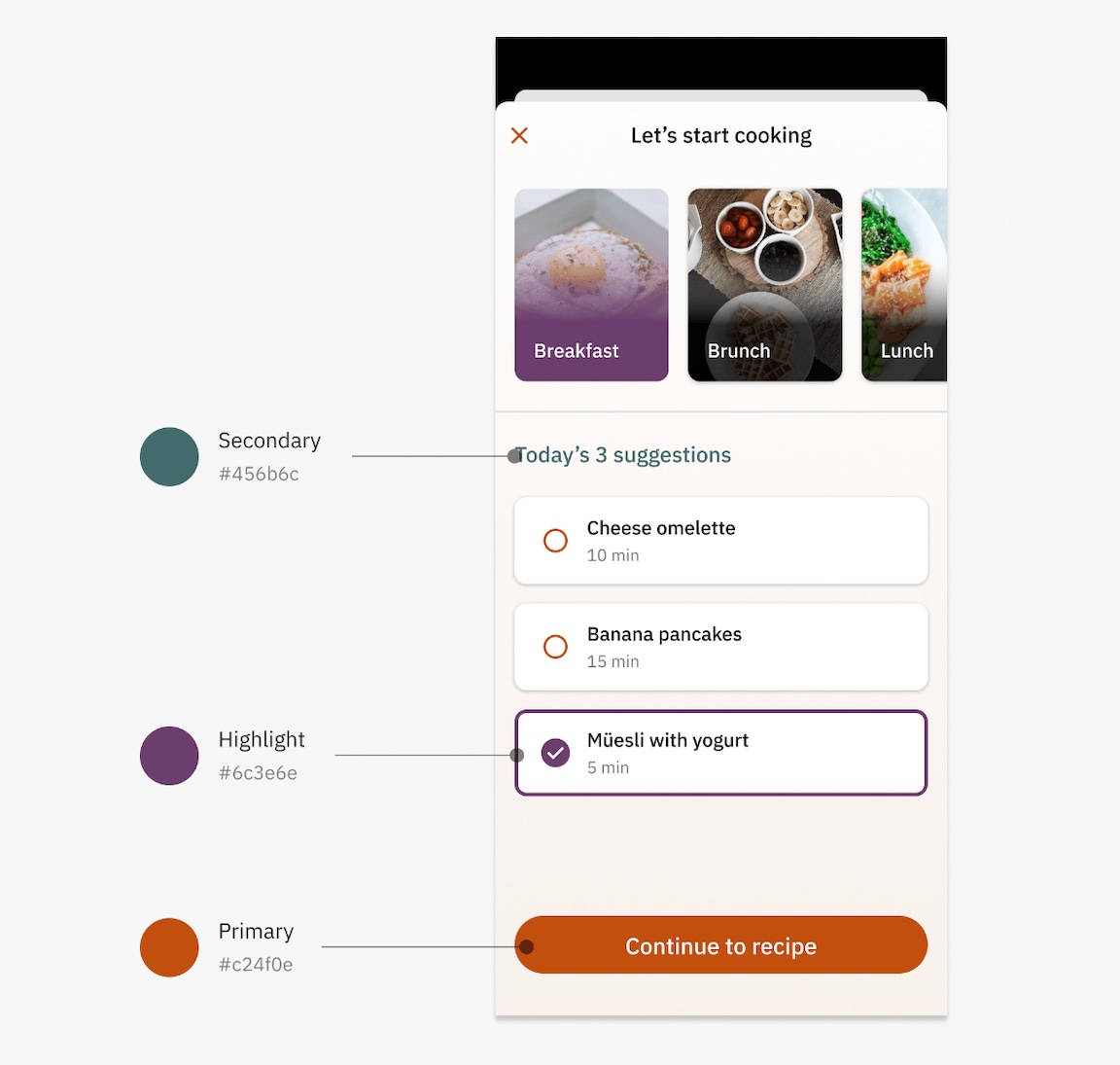
What makes a good name? Javier Cuello summarized a set of naming best practices that help you name your layers, groups, and components in a consistent and scalable way.
As Javier points out, a good name has a logical structure, is short, meaningful, known by everyone, and not related to visual properties. He shares do’s and don’ts to illustrate how to achieve that and also takes a closer look at all the fine little details you need to consider when naming sizes, colors, groups, layers, and components.
How To Name Design Tokens
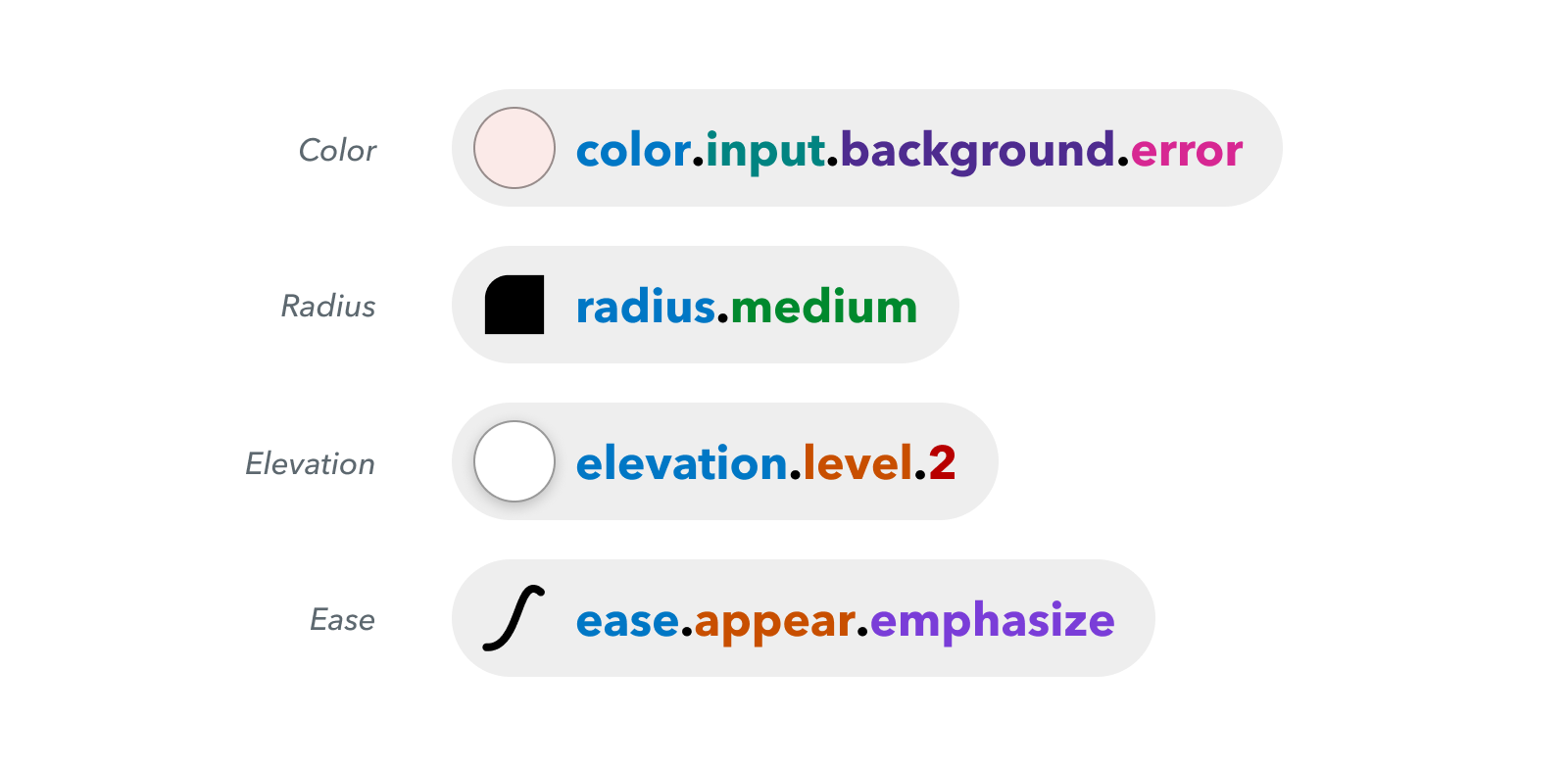
How to build a flexible design token taxonomy that works across different products? That was the challenge that the team at Intuit faced. The parent company of products such as Mailchimp, QuickBooks, TurboTax, and Mint developed a flexible token system that goes beyond the brand theme to serve as the foundational system for a wide array of products.
Nate Baldwin wrote a case study in which he shares valuable insights into the making of Intuit’s design token taxonomy. It dives deeper into the pain points of the old taxonomy system, the criteria they defined for the new system, and how it was created. Lots of takeaways for building your own robust and flexible token taxonomy are guaranteed.
Frequent Names For UI Components
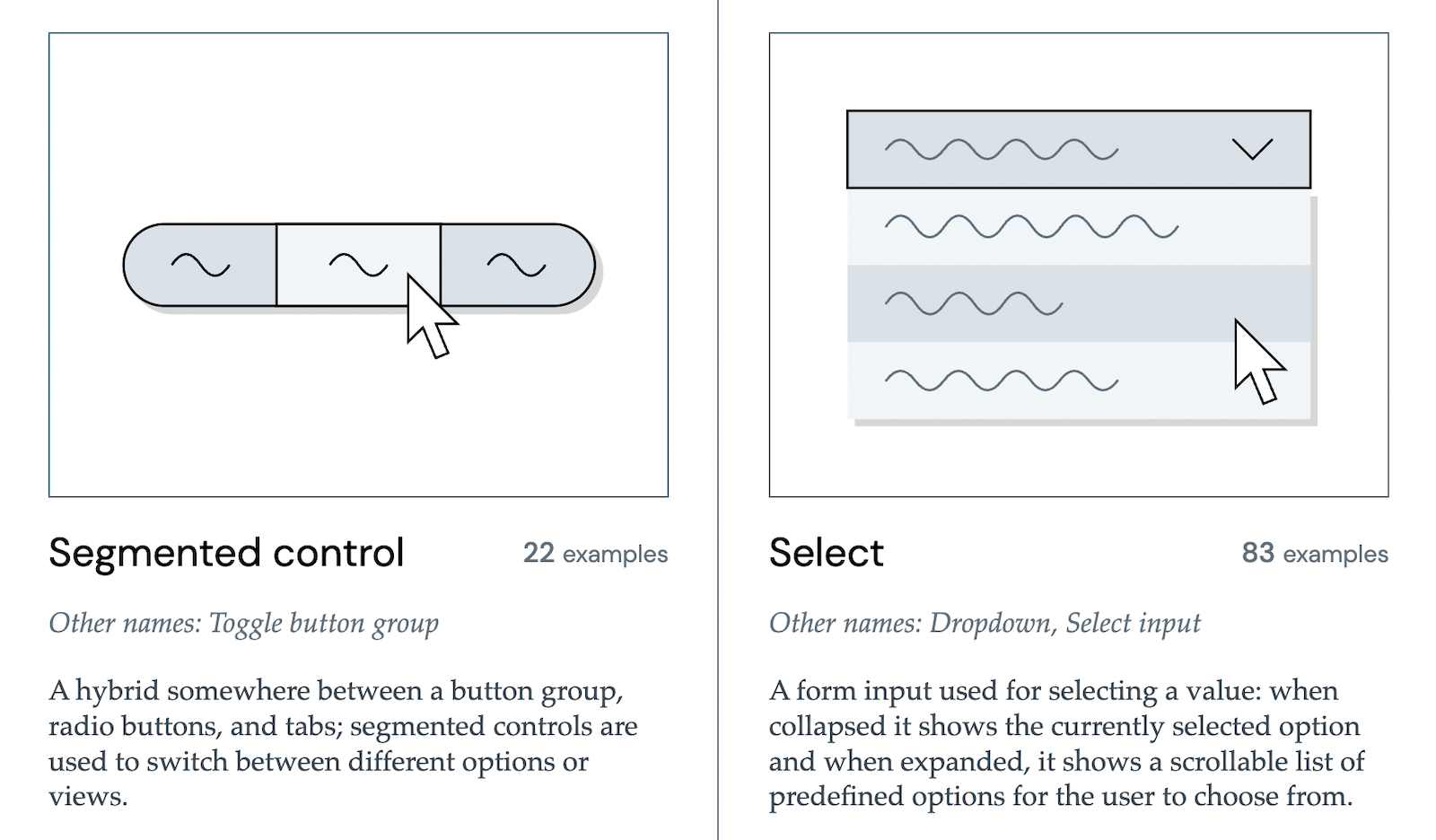
Looking at what other people call similar things is a great way to start when you’re struggling with naming. And what better source could there be than other design systems? Before you end up in the design system rabbit hole, Iain Bean did the research for you and created the Component Gallery.
It’s a collection that includes plenty of examples for more than 50 UI components — from accordion to visually hidden — and also lists other names that the UI components go by. A fantastic resource, and not only with regard to naming.
Bonus: Name That UI, a visual dictionary of common UI components.
How To Name New Features
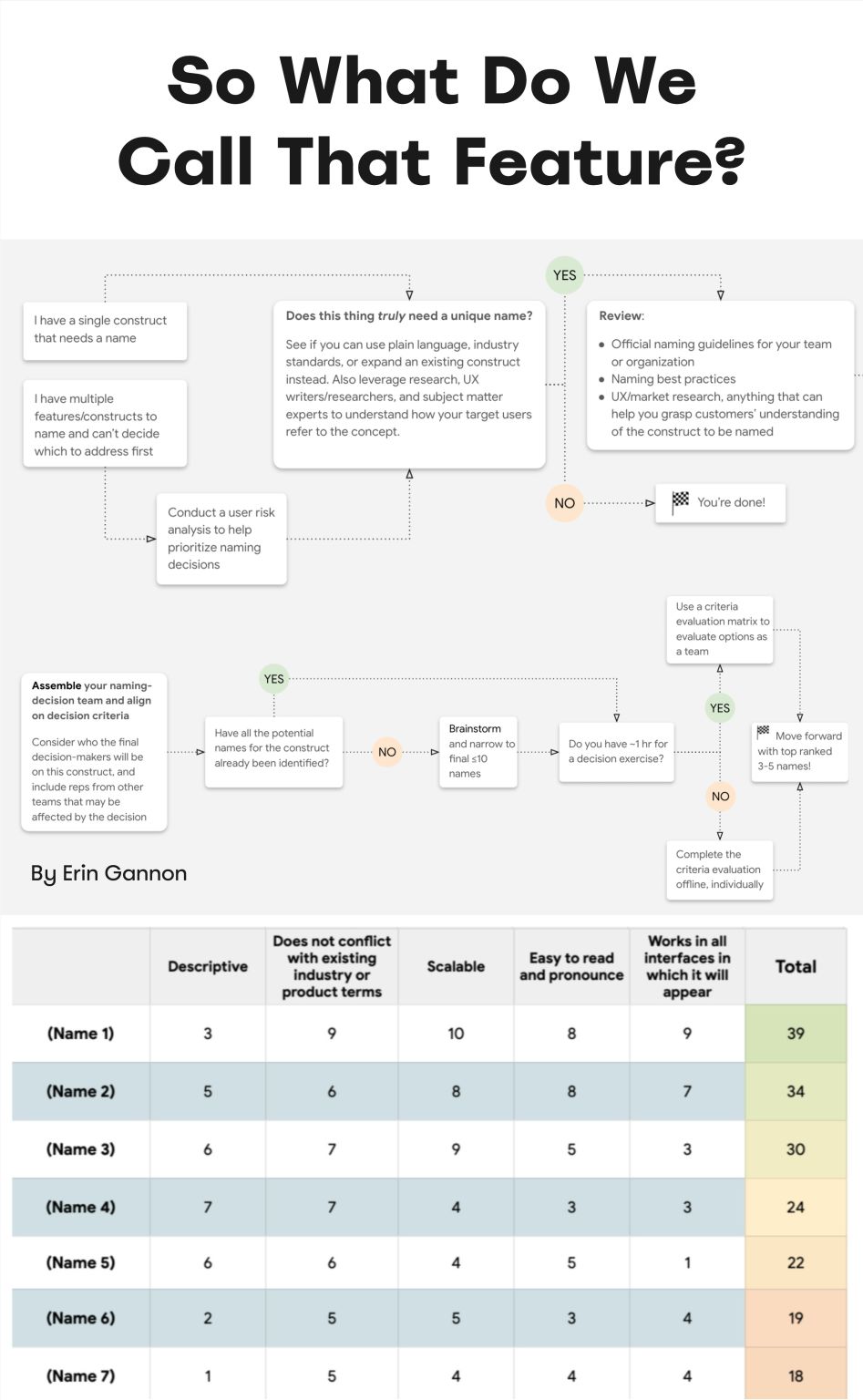
Features often have low adoption due to poor discoverability. Feature adoption needs time — first the feature must be discovered, then understood, then tried, learned, and eventually built into existing workflow. Erin Gannon has written a helpful practical guide on how to make sure all of it happens.
Good names are driven by user needs and problems. They should signal the value or outcome of a feature (the job-to-be-done), and — most importantly! — tap into the user’s own language. So ask people to explain a feature in their own words and then use the words they use.
How To Name Variables (Taxonomy Map)
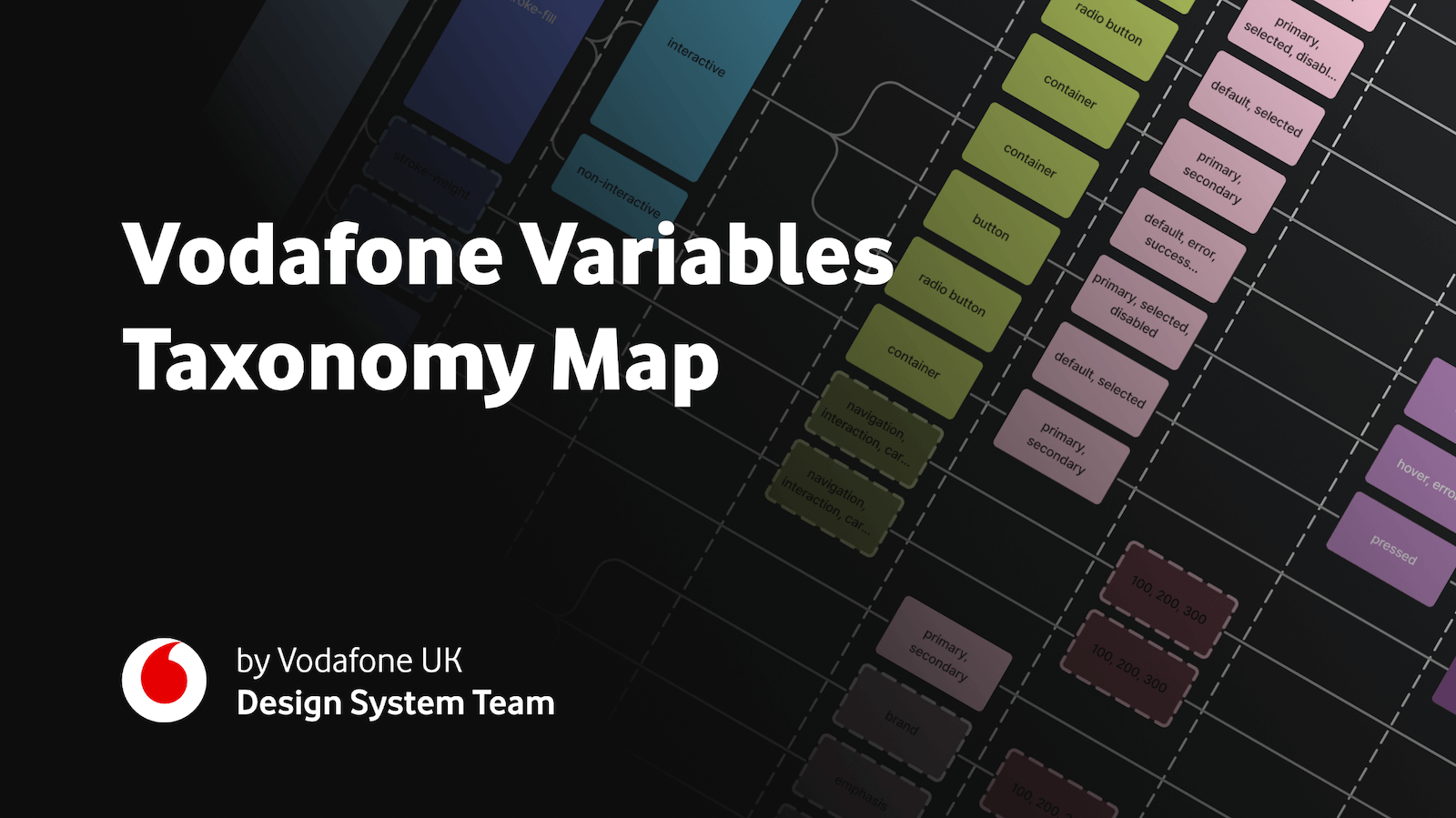
A wonderful example of naming guidelines for a complex multi-brand, multi-themed design system comes from the Vodafone UK Design System team. Their Variables Taxonomy Map breaks down the anatomy and categorization of a design token into a well-orchestrated system of collections.
The map illustrates four collections required to support the system and connections between tokens — from brand and primitives to semantics and pages. It builds on top of Nathan Curtis’ work on naming design tokens and enables everyone to gather insight about where a token is used and what it represents, just from its name.
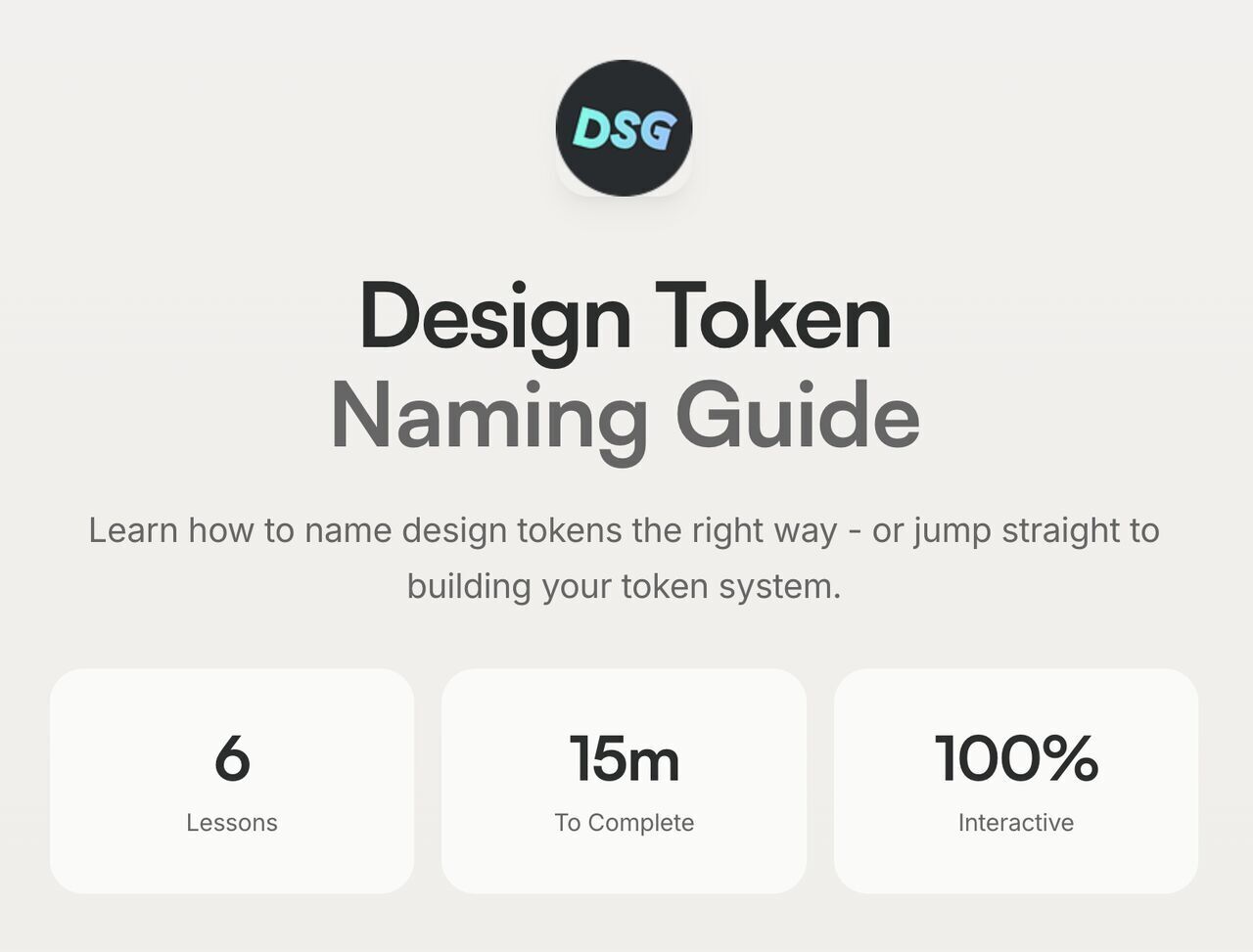
Romina Kavcic created a helpful little tool for naming design tokens — from learning how they work and how to name them well to configuring your own naming structure with components, categories, states, and roles.
Bonus: The Design Token Names Inventory spreadsheet, with a simple structure with four levels to give you a bird’s-eye view of all your design tokens. You can easily add rows, themes, and modes without losing track, and filter your tokens.
Naming Products or Services
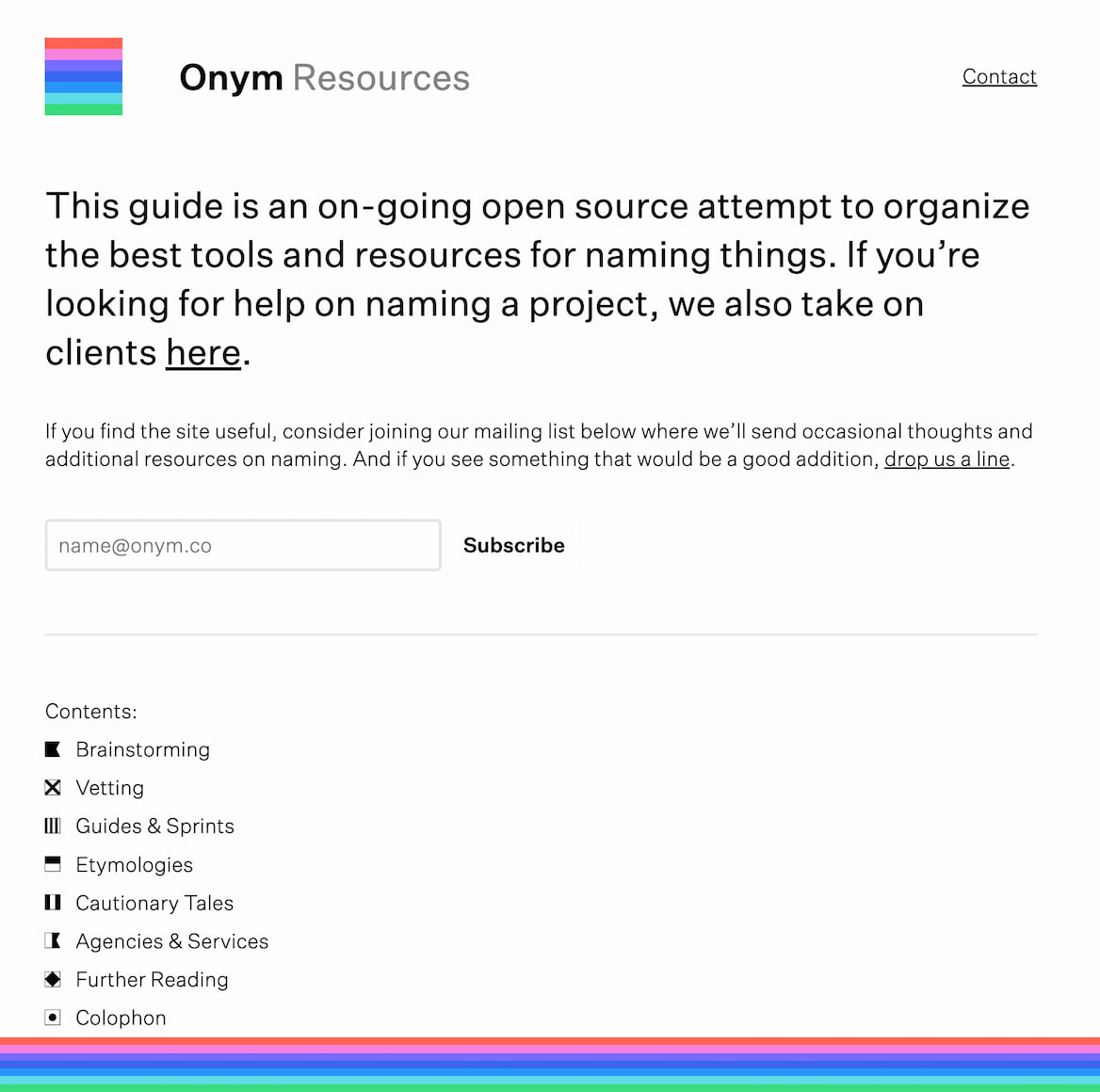
If you are looking for the right name for your product or service, Onym is a fantastic open-source repository that organizes tools and resources for finding names for brainstorming, vetting, guides, sprints, etymologies — all the way to cautionary tales and agencies that name things, as well as useful books to take a look at.
Useful Bookmarks for Naming Things
A quick-reference list of tools and guides for naming just about... well, anything, in one place:
The right name is the one that’s well-understood and used by the team and users. So much time is wasted speaking about the very same thing but in different dialects — the designer’s dialect, the developer’s dialect, the product manager’s dialect, and the user’s dialect. That’s what often causes frustration and confusion.
So if you see low adoption, it might be merely because of the name. And pay attention to potential naming conflicts and put them in a backlog of things to address later. It’s one of those fine little details that can reduce frustration and confusion and help teams work together better.
Editor’s Note
We hope you’ll find these wonderful projects useful — put together by wonderful creators. A friendly shout-out to everyone sharing their work with folks to use and learn from! That’s one of the reasons why we truly love the web and people building and designing it. 💚
At Smashing, we love the web. That’s why we publish articles and books, run workshops and events around everything web. We love seeing what we all can do to make the web more accessible and usable. We also love organizing and attending online events — with friendly discounts for large groups (5+ attendees) and schools and students. Interested? Just send us an email and we’ll sort it out!
Conférences, présentations, discours, réunions… De nombreux événements restent ou reviennent en présentiel. Ces événements incluent souvent une présentation, des prises de parole et… un manque d’accessibilité pour les personnes sourdes.
Même dans le cadre d’événements internes, où il serait facile de penser qu’aucune personne sourde ne participera, le sous-titrage a sa place. En effet, la surdité présente différents niveaux, de légère à profonde, et certaines personnes peuvent avoir besoin de sous-titres sans que vous le sachiez. Et plutôt que d’avoir à connaître les besoins individuels de chaque personne, il est bien plus simple de rendre ces événements accessibles par défaut.
Recevoir des fichiers volumineux se révèle souvent plus laborieux que de les envoyer. Tour d'horizon des méthodes proposées par TransferNow pour collecter des fichiers lourds auprès de clients et de prestataires.
La technologie d'OpenAI oriente le choix des mots de ses modèles pour laisser une empreinte invisible, pouvant être repérée par son détecteur. Mais la méthode a ses failles.
À partir du 9 octobre, les comptes Gemini sans abonnement n'auront plus accès qu'au modèle Flash-Lite. Les abonnés AI Plus perdent de leur côté l'accès au modèle Pro.

 Connexion

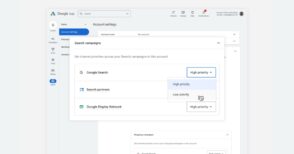 Google Ads déploie deux réglages optionnels pour hiérarchiser les canaux de diffusion et limiter la part du budget quotidien consacrée aux moins prioritaires.
 À la découverte de MVP, podcast de référence sur le SEO et le GEO qui présente depuis déjà 3 ans les nouveautés qui agitent le domaine.
 Score sur 100, benchmark sectoriel et conseils actionnables : l'audit Instagram gratuit d'Auguste permet de repartir sur des bases solides avant de relancer sa stratégie social media.
 Anthropic aborde Google Workspace par les deux bouts, avec une extension qui travaille dans le fichier ouvert et des connecteurs qui pilotent Docs, Sheets et Slides depuis le chat.
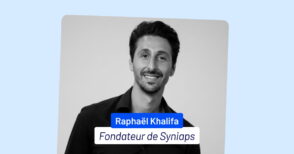 Mémoire absente, chemin figé, validation floue : Raphaël Khalifa, fondateur de Syniaps, détaille les trois causes qui font échouer les projets d’agents IA en entreprise.
 Depuis le 2 août 2026, l'AI Act impose de signaler certains contenus produits par IA. Nous avons sélectionné 12 outils gratuits pour déclarer un contenu généré par IA et analyser un texte, une image ou une vidéo dont la provenance n'est pas établie.

 Mistral AI présente Mistral Large 4 comme le meilleur modèle à poids ouverts d'Europe et des États-Unis. Un lancement très attendu pour une entreprise soupçonnée d'avoir décroché face aux laboratoires chinois et américains.
 Anthropic veut que chaque développeur puisse adapter Claude Code à sa manière de travailler.
 L'avocat Alexandre Bigot-Joly est l'invité du podcast Follow Back, produit par Swello en partenariat avec BDM. Dans cet épisode, il revient sur le cadre juridique de la creator economy, entre transparence obligatoire et risques liés à l'IA.
 Depuis plusieurs jours, les bots envahissent les posts Instagram des comptes d'influenceurs et de médias français. Mais qui se cache derrière ces profils ?

 Recevoir des fichiers volumineux se révèle souvent plus laborieux que de les envoyer. Tour d'horizon des méthodes proposées par TransferNow pour collecter des fichiers lourds auprès de clients et de prestataires.
 La technologie d'OpenAI oriente le choix des mots de ses modèles pour laisser une empreinte invisible, pouvant être repérée par son détecteur. Mais la méthode a ses failles.
 À partir du 9 octobre, les comptes Gemini sans abonnement n'auront plus accès qu'au modèle Flash-Lite. Les abonnés AI Plus perdent de leur côté l'accès au modèle Pro.
