❌

Vue normale

Accordion Icons: Which Work Best?

So what icon is the most reliable to show expansion and collapsing for accordions? Is there really any noticeable difference between carets, chevrons, arrows, and triangles?

Well, research shows that there is some difference indeed. But what’s more interesting is that split menus are harmful, why it's better to not have icons and text labels link to different actions, and why the caret is the safest icon choice. Let’s dive in!
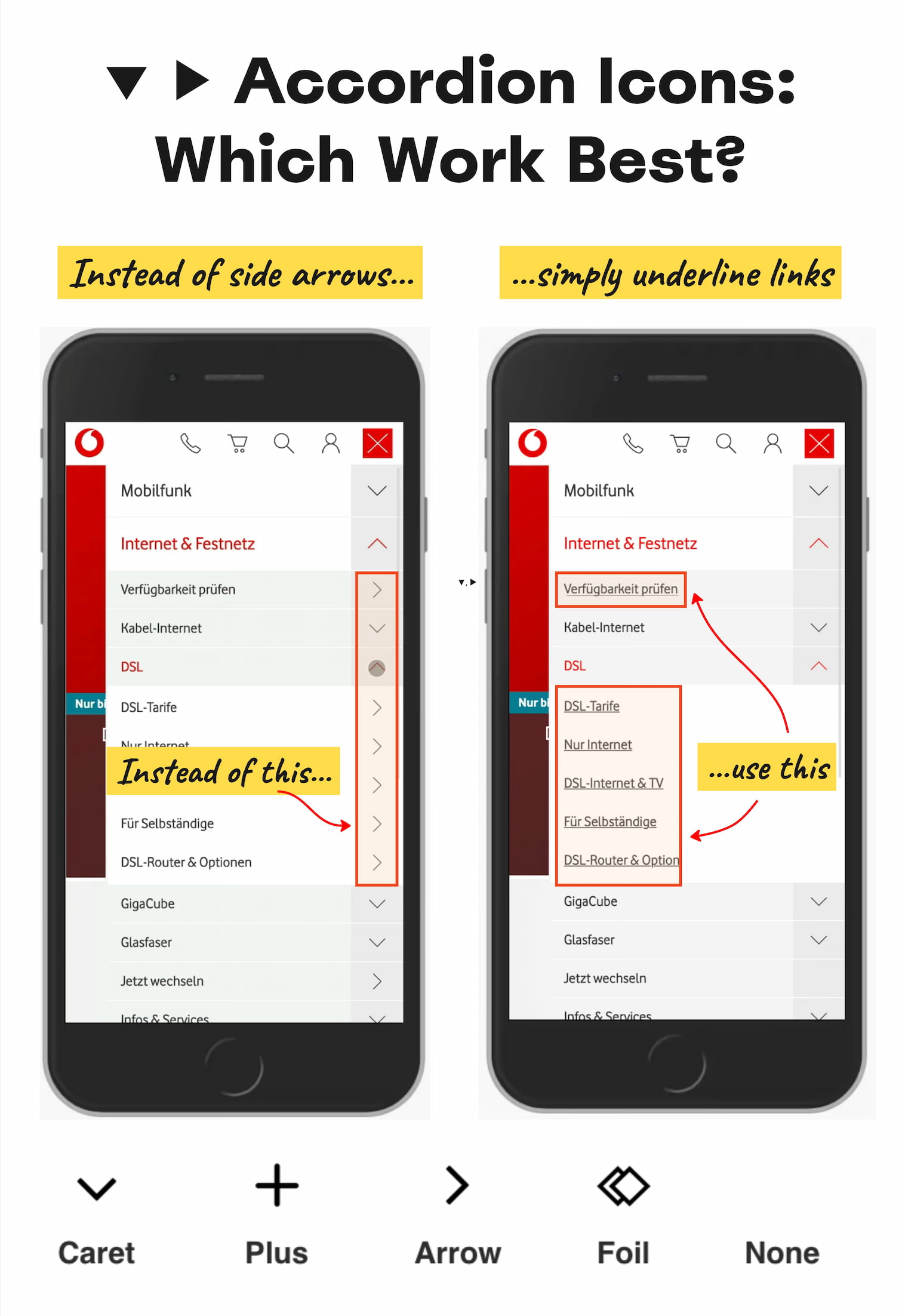
No Icon = Opening The Page

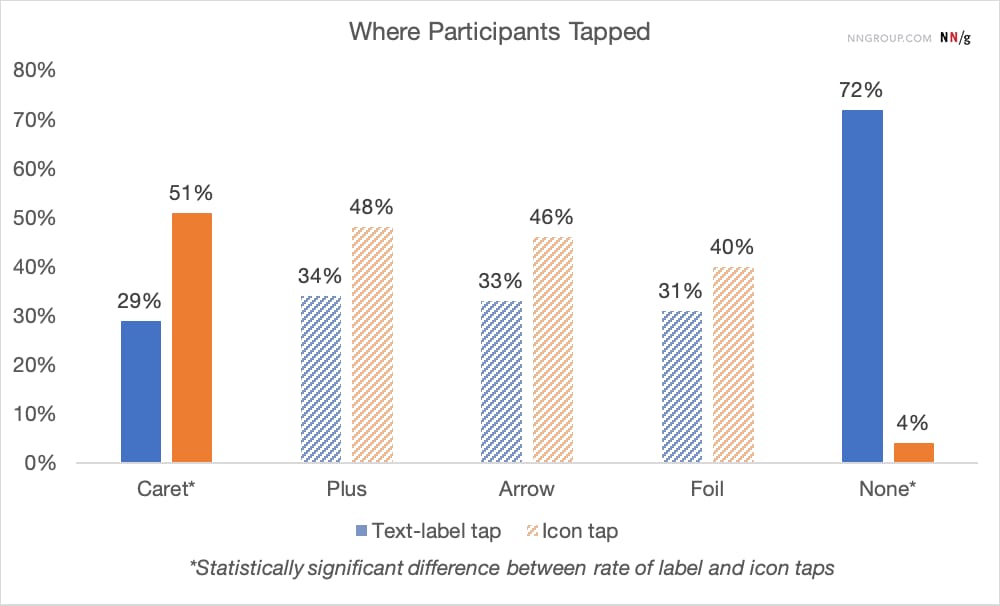
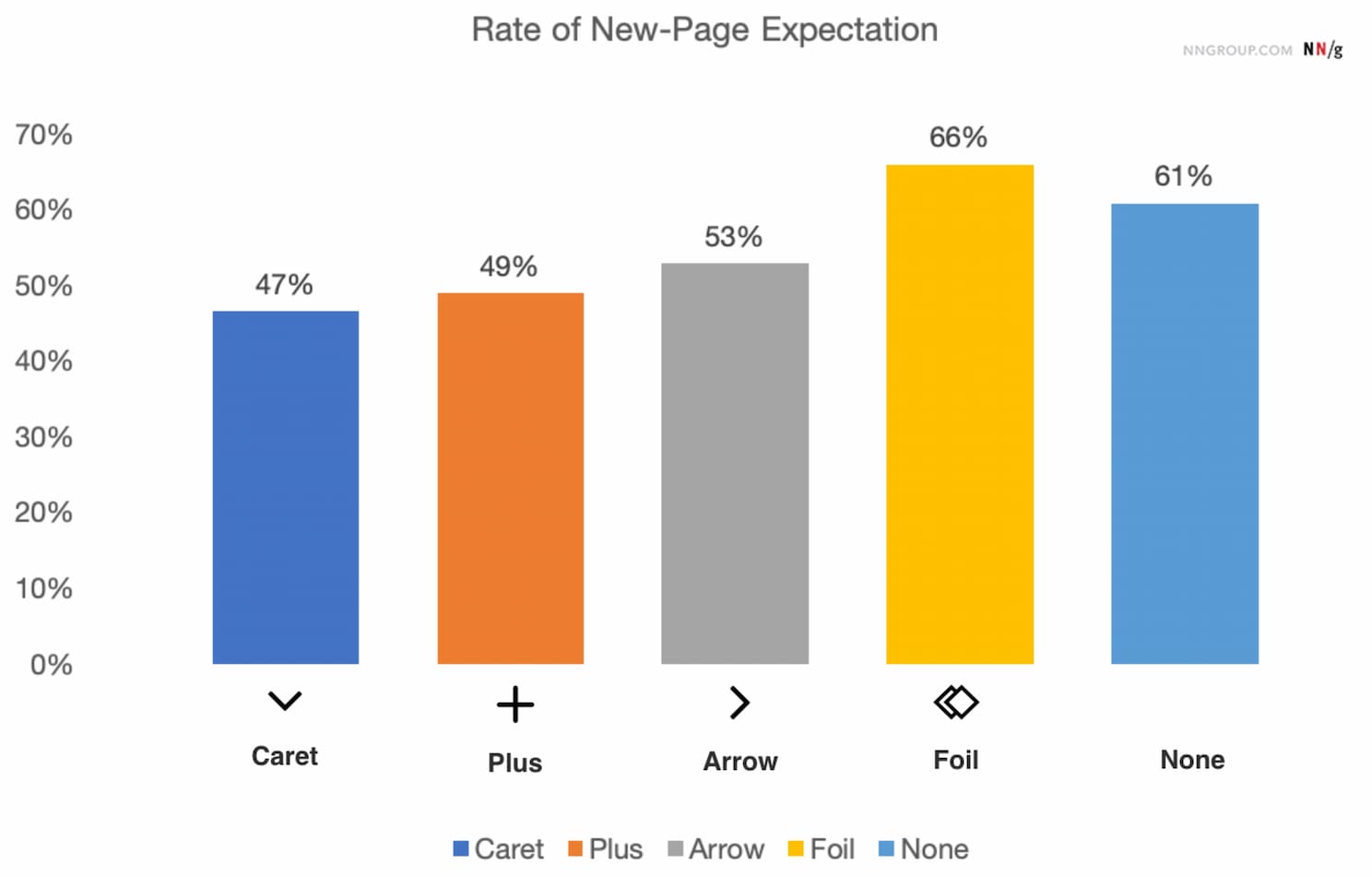
The findings aren’t very surprising: without any icon in use, users expect that tapping on the menu item would take them directly to a new page. Users often struggle with custom icons as they don't clearly signal that they'll open an accordion. And people tend to tap fairly equally on the icon and on the label for most icons.
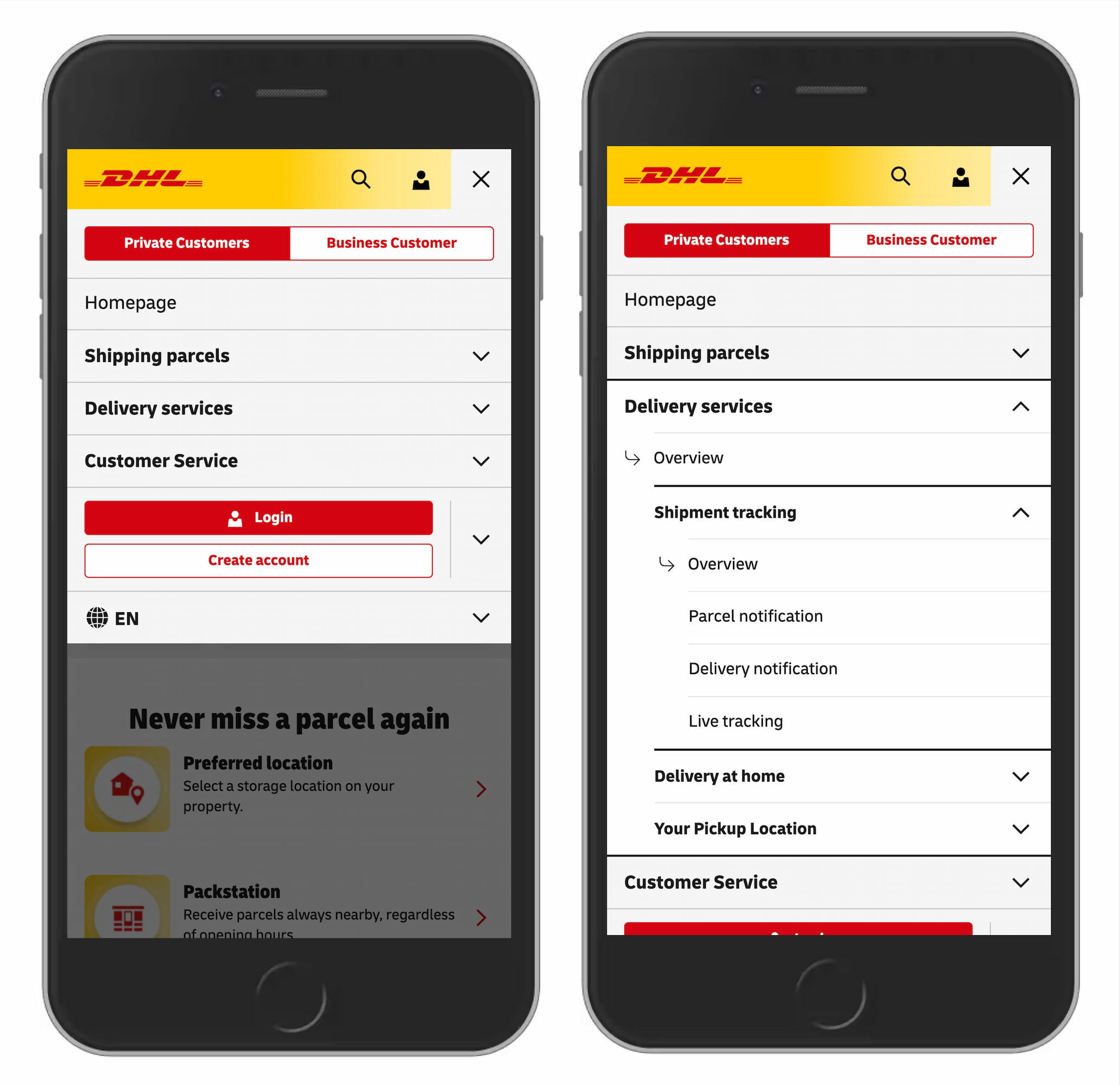
Many designs (like the one below) tend to slightly overcomplicate things by adding arrows and carets pointing everywhere, depending on the state of the accordion. But typically we don't need to use an arrow to indicate a link to the category.
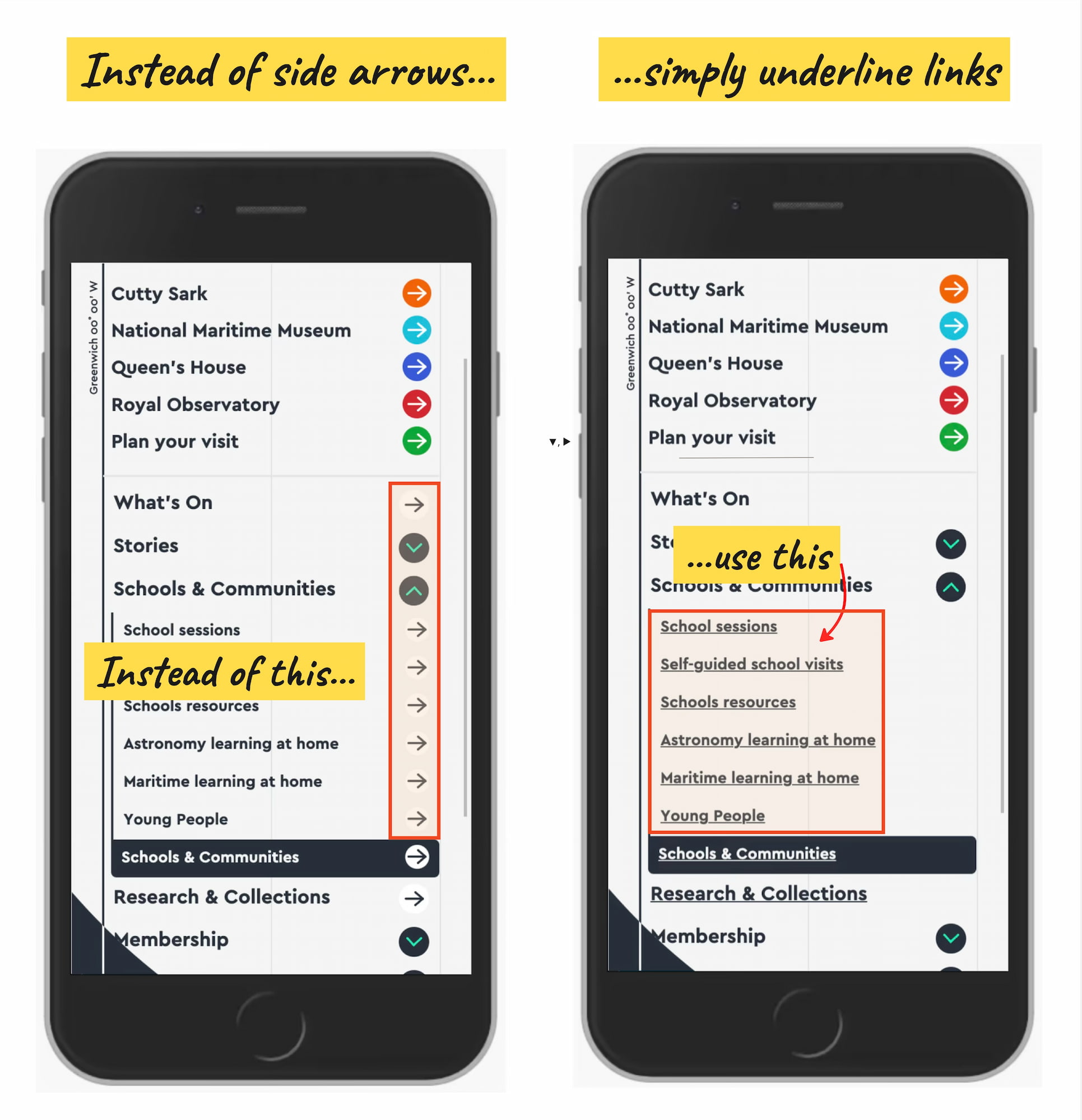
The rule of thumb is very simple: if it’s a link, the easiest and most effective way is to simply underline it — without any arrow, caret, or other icon. Perhaps it’s not particularly exciting, but it works flawlessly every single time.

Confusing Behavior With Arrows ▶ and Split Buttons

Using a right-facing arrow icon ▶ isn’t associated with an expectation of going directly to a new page. And having the same icon pointing down ▼ doesn’t necessarily imply that an accordion is going to open on tap/click.

It’s a good idea to avoid split buttons for accordions — where the text label links directly to a page, but the icon opens the accordion. Instead, it’s much more reliable to allow users to tap on a main category and expose the menu; and to access the category page, we add a link to it inside the menu.
Plus +/− and Arrows ↓/↑ Are Understood, But Can Be Misunderstood

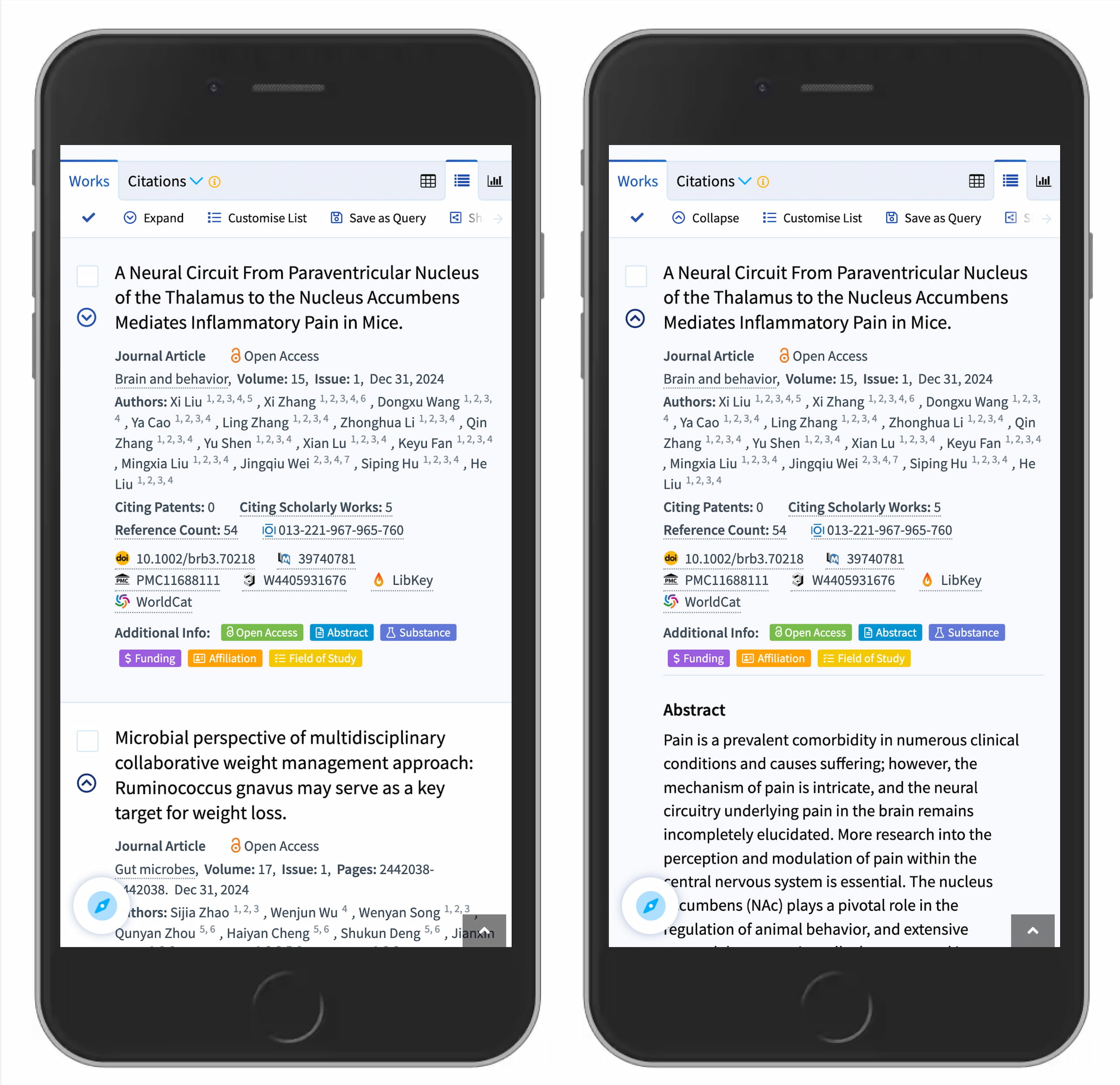
For accordions, we typically use +/− or arrows ↓/↑ to signal expanded and collapsed states, and typically it works well. However, both have many different interpretations. Plus + can mean anything from saving for later to adding to cart to zooming in, and can be particularly confusing for multi-level navigation, with many levels open at the same time.
Arrows ↓/↑ can mean scrolling or sliding or finding the next match, but also a jump to a particular portion of a page. Both plus and arrows are well-understood and work, but depending on the design, can be confusing — mostly because they are overloaded.

Wrapping Up

The safe choice is to use the caret/triangle pointing down ▼ by default, and change it to a caret pointing up or a caret pointing sideways ▶ on interaction. If you need an alternative, then +/- typically work well, too.
But we certainly don’t need any further icons or arrows to indicate where the links go. The same goes for split menus, which often produce more mistakes than help. Instead, we have one button or dropdown that does exactly one thing — shows all options and allows users to drill down.

And if you need a direct link, we link the title directly to the page and underline it. More often than not, simpler is better.

Editor’s Note

We hope you’ll find these wonderful projects useful — put together by wonderful creators. A friendly shout-out to everyone sharing their work with folks to use and learn from! That’s one of the reasons why we truly love the web and people building and designing it. 💚

At Smashing, we love the web. That’s why we publish articles and books, run workshops and events around everything web. We love seeing what we all can do to make the web more accessible and usable. We also love organizing and attending online events — with friendly discounts for large groups (5+ attendees) and schools and students. Interested? Just send us an email and we’ll sort it out!

Pouvoir

23 octobre 2026 à 13:00
En réaction à Transparence et inconséquence par Arthur Perret

Quand on s’informe, pratique et publie autant que lui sur ce sujet, on devrait être en capacité de poursuivre le raisonnement sur quelques lignes de plus… Alors pourquoi ça s’arrête là ?

Je vais éviter de réagir au billet d’origine sinon je vais devenir tout rouge (j’ai déjà pris +5 en misanthropie juste en le lisant). J’aime la réponse d’Arthur car il vient soulever des questions importantes et je suis de plus en plus convaincu qu’il s’agit d’une simple logique de pouvoir et que très rares sont les personnes qui arrivent à y résister. Il y a tellement peu de voix qui s’élèvent en ce moment pour mettre en lumière ces contradictions provenant de personnes ayant un capital social destructeur.

Je peux tout risquer — mais alors vraiment tout — si j’ai l’opportunité d’égoïstement avoir le sentiment d’être au-dessus de mon voisin pendant un court instant. Des années d’évolution juste en étant tiré par cette irrésistible envie de s’élever… en prenant appui sur mon prochain qui n’a pas été assez chanceux pour m’écraser le premier.

Et au passage dépenser le plus d’énergie possible car ce gaspillage définit mon statut social de privilégié. Comme j’en parlais précédemment, le modèle / service utilisé va très rapidement devenir un marqueur social. Peut-être même que le modèle technoligarchique actuel n’est effectivement pas supportable du tout à cette échelle et on va se retrouver avec la même organisation plus distribuée de propriétaires qui auront investi dans de l’infrastructure numérique et des locataires qui paieront pour pouvoir accéder à des LLM. Joie.

This caused Claude Code for web to churn for over 12 hours […] but how valuable is that if I created it on a whim and can’t (or won’t) invest the necessary time to understand what it can do? • sparqlite: SPARQL 1.1 inside SQLite, written in Rust

No shit Simon, wake up…


Il y a dix ans, quand le principal défi était l’invisibilité, il était logique de nommer l’identité, expliquer ce qu’elle signifiait et à faire connaître ses arguments. Dans un environnement davantage polarisé, cette stratégie reste utile auprès de certains publics, mais elle ne suffit plus. Il faut aussi éviter que le message soit reçu d’abord comme le signe d’un camp auquel on refuse d’appartenir.

On fait quoi avec ça? Les recherches en psychologie sociale et sur les changements de comportement ne fournissent évidemment pas de recette magiques pour relancer un mouvement. Mais elles offrent plusieurs pistes intéressantes pour réfléchir à nos façons de convaincre et de mobiliser.

Après la vague, Elise Desaulniers

Je ne suis pas végétarien. J’y aspire, j’en suis très proche, mais je ne le suis pas. J’ai pourtant conscience des enjeux qui sont assez similaires à ceux de l’usage de l’IA en termes d’externalités négatives (impacts écologiques, privation des ressources du sud global, etc).

Refus de parvenir dans un sens, refus de devenir dans l’autre. Et le ressac sociétal qui me donne bien souvent l’impression de nager à contre courant. C’est épuisant et nauséeux. Car j’y vois aussi cette affirmation assumée du pouvoir d’une espèce mortifère sur les autres, d’une population riche sur les autres.

Comment supporter cela ?


Et ils veulent que vous ayez peur parce que la vision du monde qu’ils défendent est celle des dominants sur les dominés, et que cette vision est allée aussi loin qu’un génocide diffusé en direct, avec la complicité de nos gouvernements qui fabriquent et financent leurs armes. Un génocide qui n’était pas caché, mais revendiqué.

C’est pour vous fermer la gueule (ne la fermez pas)

Et puis il y a les guerres. La démonstration de pouvoir ultime. On s’y habitue, de loin. On oublie, d’encore plus loin. On joue à la guerre commerciale avec le voisin pour se rassurer. Nous, nous sommes forts, nous sommes unis (regardez l’Alberta), nous sommes ouverts (ne regardez plus l’Alberta). Personne n’est dupe.

Dans le contexte actuel, je pense que j’aurais envie de brûler un peu plus que des poubelles si j’étais jeune. Parce qu’agiter un keffieh à 9 000 km ça ressemble un peu à applaudir à sa fenêtre… et ça suffit pourtant à tout un déferlement de haine, de racisme et d’incompréhensions 😔.


— Quelle vie Tintin !
— Ce n’est que la quarantaine Capitaine…


Réagir ?

❌