❌

Vue lecture

Many Agents, Many Views

In today's AI-powered software, you manage agents, they manage more agents, and those agents manage even more agents. Chat threads break with that scale. We need to know what agents are planning, what they've already done, and how best to steer them. In other words we need different ways of seeing things.

When most people think about staying on top of agent activity, they jump to management views: an inbox like those found in Slack and email; a dashboard like those found in monitoring apps. Effectively these answer the question "what are my agents doing right now?"

I took a look at inboxes, Kanban boards, task lists, dashboards, and calendars in a post last year about agent management interface patterns. But while these kinds of agent views currently get all the attention, more specific and dynamic views may actually be more useful.
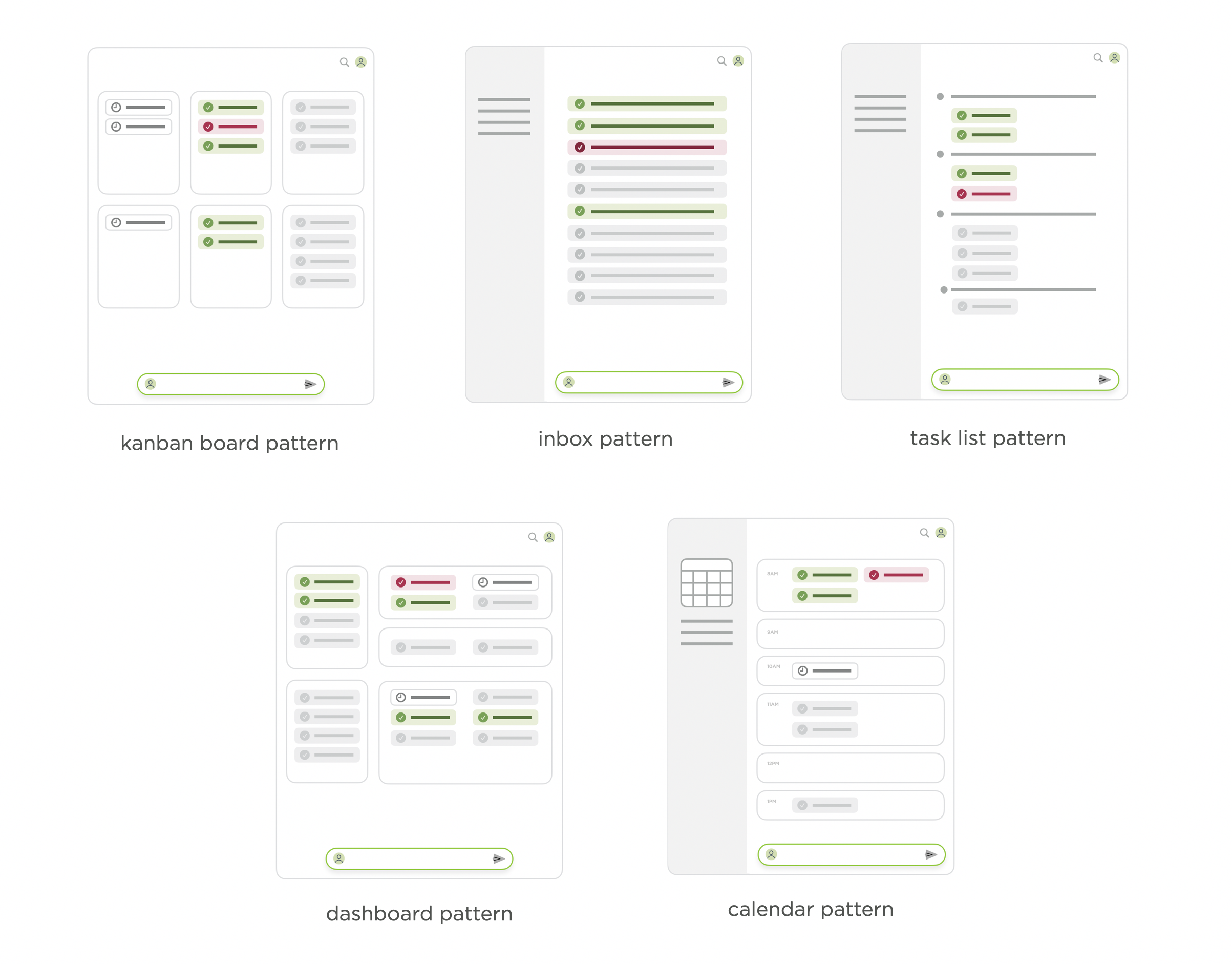
agent management interface patterns, like inbox, calendar task, list, dashboard

That's why in Intent, our large scale agent coordination tool for developers, we've built in multiple ways to see what's going on. Intent lets you create any number of documents (we call them notes) when working on a task, so you can have the specific views you need when you need them. A few examples:

Agents can draw architecture maps, flowcharts, sequence diagrams, and state machines inside notes and chats so you know what they are planning to do, and how, before spending the tokens.
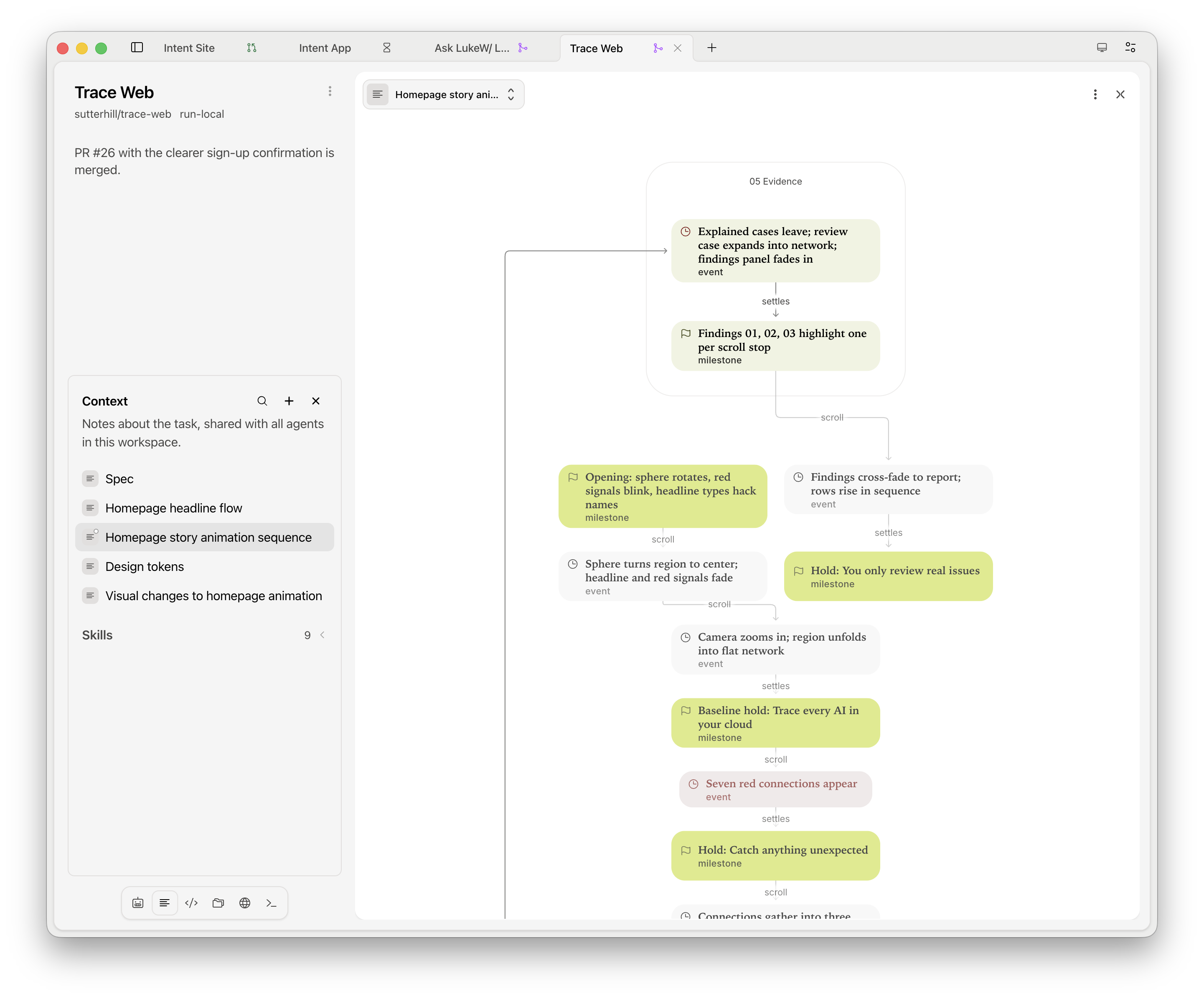
diagram views of agent plans in Intent

Stepped walk-throughs move you through a diagram one stage at a time, each with a short explanation and the relevant parts highlighted. This not only makes plans easier to follow but also helps you quickly understand the current state of things. Boxes that reference files or notes open them when you click so can go deeper if needed.
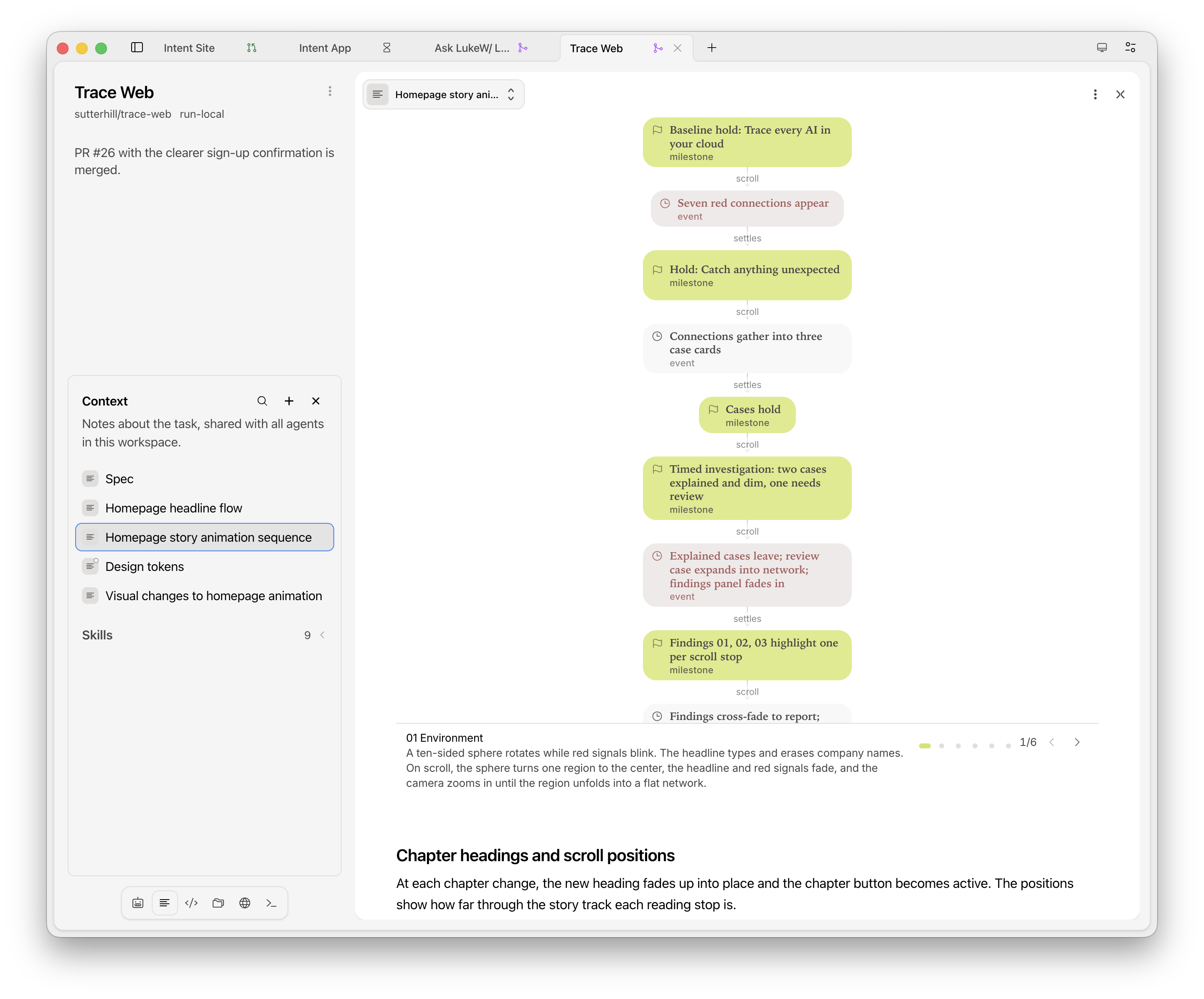
step by step diagram views of agent plans in Intent

Agents can take before and after screenshots of their UI changes and place them side by side in a note letting you judge results without reading any code. These notes can update with each change or stick around as a historical record. Agents in Intent can also pin a screenshot to show progress at a glance.
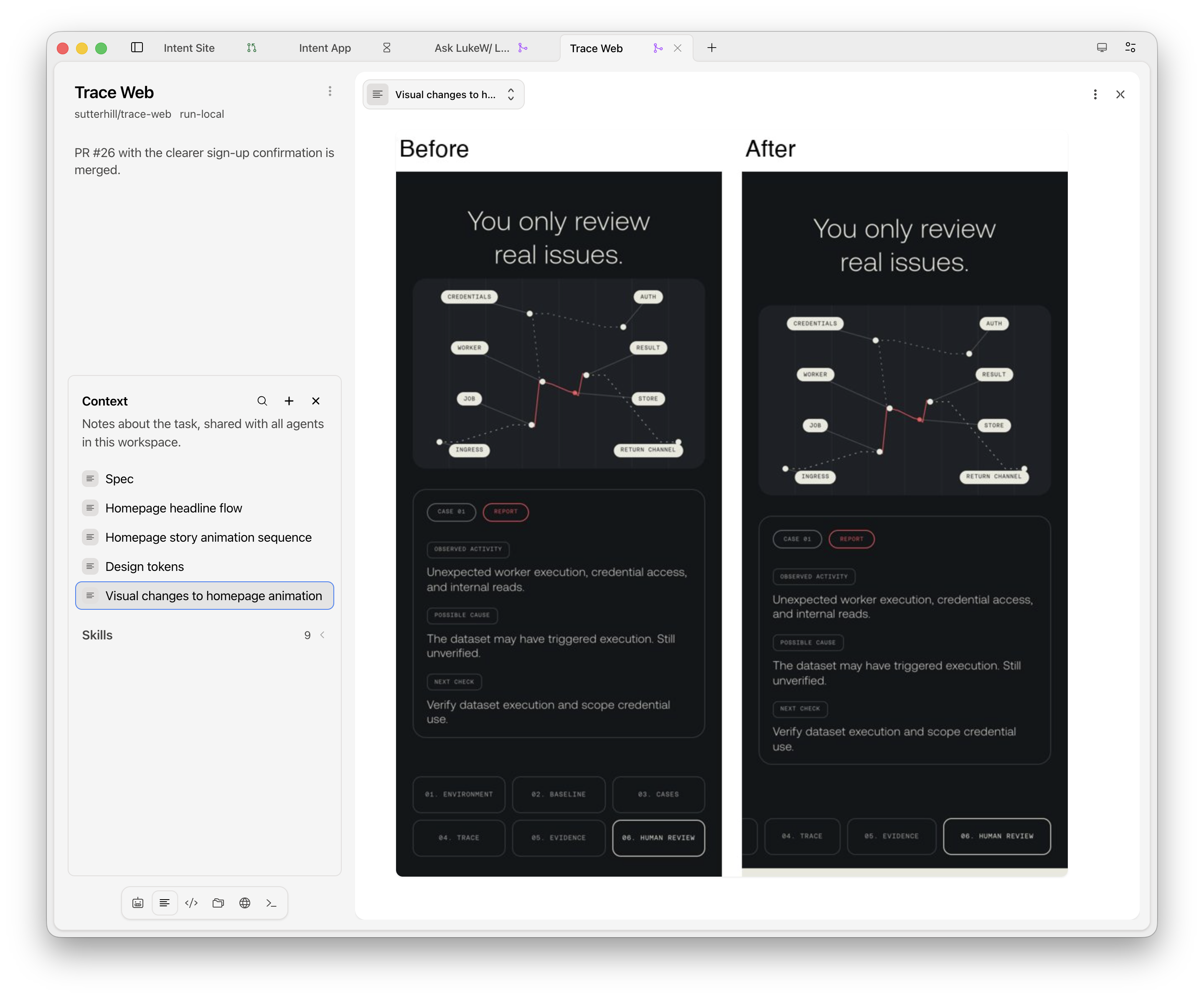
Visual reviews of ancient changes in Intent

A app or website's design system can also be viewed as a note: colors, type styles, spacing, corner rounding, animation timings, and components with their variants, all in one place. Keeping a view like this open while you work makes "which padding?" one glance away. Agents read the same notes, so their UI work lines up with your references.
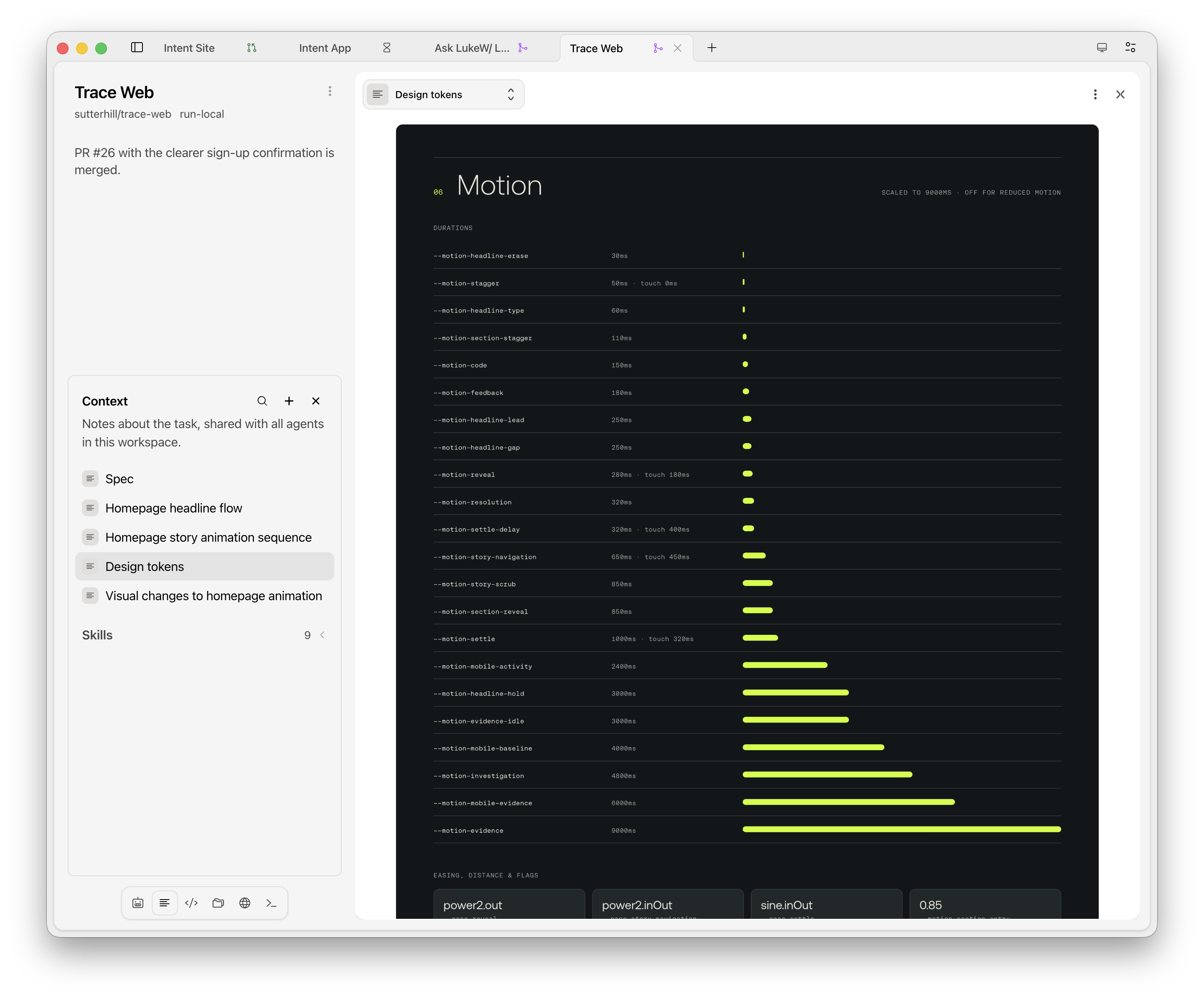
dynamic design system views in Intent

Of course, lots of views aren't much help if you can't set them up in a way that's useful. Every panel in Intent can hold a stack of agents, notes, files, terminals, and browser tabs. Drag things between panels, drop one on an edge to split off a new panel, and zoom any panel to full screen if you need focus.

Yes, chat still has a place for kicking off, moving along, and redirecting work. But as agents keep multiplying, a configurable workspace of useful views goes a long way toward steerings thing toward the outcomes you want.
  •  

Design Systems for AI Agents

For as long as I've been working on design systems (20+ years, oof!), I've seen the same pattern play out... design teams invest a lot of time in creating a system, then struggle to keep it up to date as the actual product evolves. Inevitably the design system ends up describing a product that no longer exists.

The most common way to address this was to throw more resources at the problem: design system teams and/or centralized design reviews. But now, AI agents give design systems a different path forward. When agents write most of the code, the design system can become part of what I've called the AI steering layer: the context that keeps every website update aligned with brand, design, and development guidelines. Put simply, a design system for agents is a steering layer for a site's design and front-end code.

With AI agents, anyone on a team can update a website. Marketing adds landing pages, engineering adds docs, a PM tweaks the pricing page. Each of their agents will happily implement its own tone and voice, colors, spacing, etc. unless something steers them toward a unified whole.

That's the case for collaborative steering. A design lead and front-end lead define the grid, fonts, colors, spacing, and components once, and everyone's agents are "snapped to" it. The team keeps shipping and the site keeps its integrity. So what does that look like in practice? Here are a few examples from our recent projects.

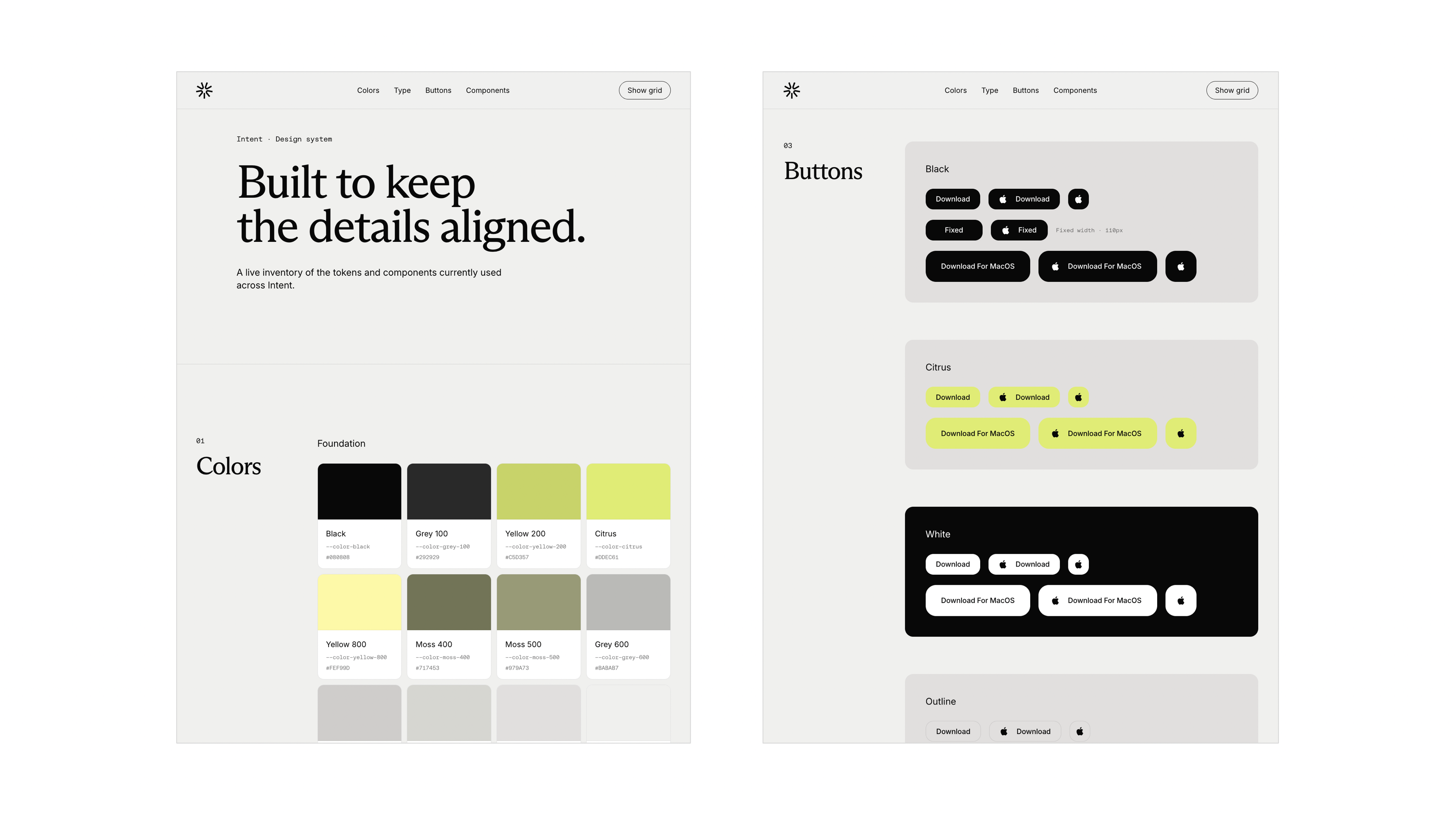
On the Intent website, an AGENTS.md file tells AI agents to reuse the theme classes and CSS variables in the site's global stylesheet instead of duplicating color, typography, or grid values. That stylesheet defines colors, fonts, type sizes, the responsive grid, and light and dark themes as design tokens (named values the whole site shares). A design system page shows it all as live examples agents can inspect.

design system page for agents to apply when people make changes to the Intent website

When someone asks an agent to add a new button, it reuses the existing Button component and its styling, which also adapts to dark mode automatically. And no human has to look anything up.

Intent's design system started from Figma specs that were automatically translated into code using a Figma MCP connection. After that, the code itself became the source of truth and was updated with a new body font, responsive layouts, dark mode, and more as the site evolved. We've even had agents write changes back to the original Figma files. But since the code is the source of truth, that hasn't been necessary in practice.

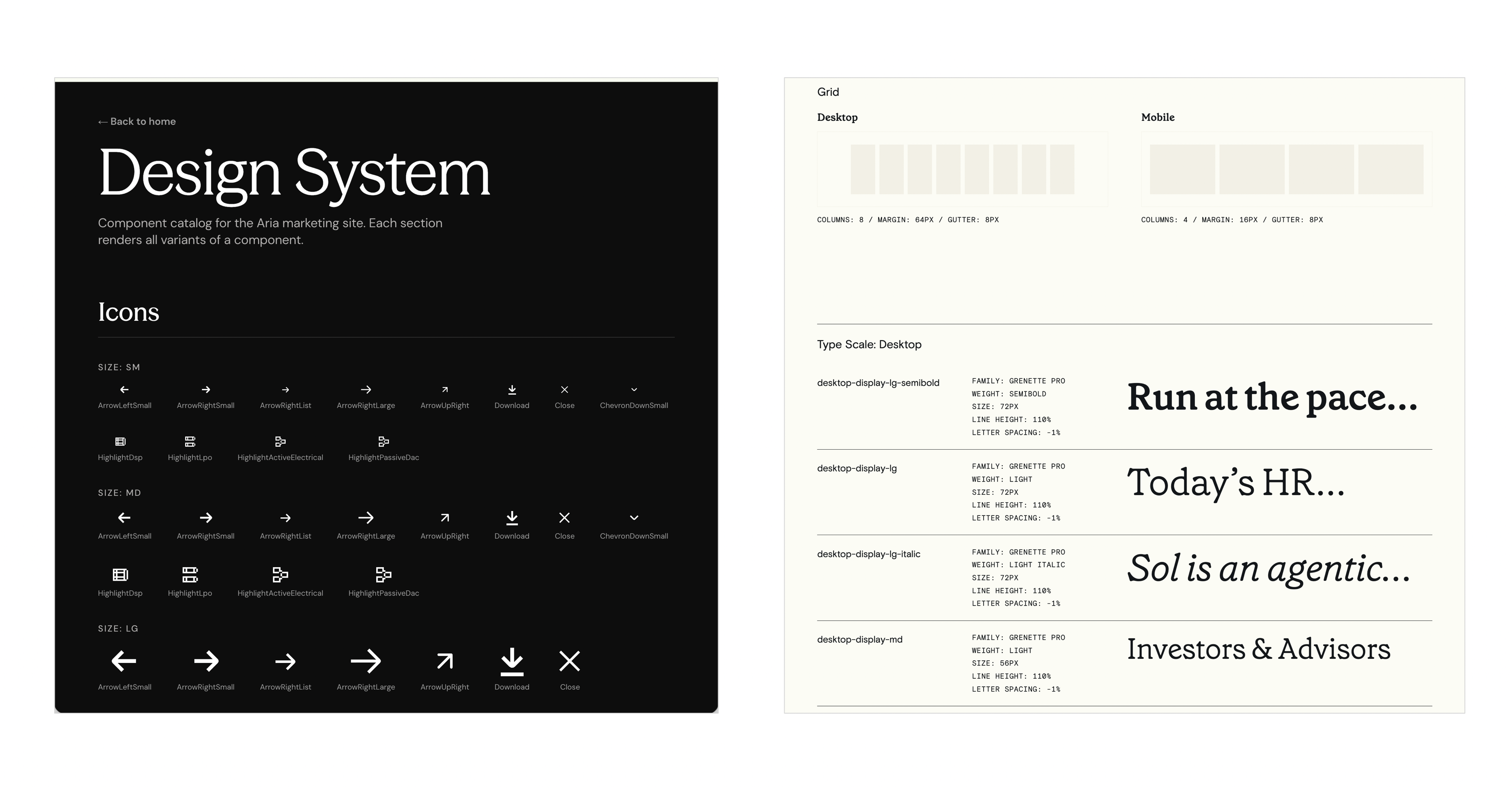
design system pages for agents to apply when people make changes to the Sol and Aria websites

Sol and Aria's websites follow the same approach (links go to their design system pages), each with design tokens, agent instructions, and a design system page that stays current because it's built from the same code as the site.

Design teams have spent years trying to get people to actually read their design system documentation. Agents read it every single time.

  •  
❌